
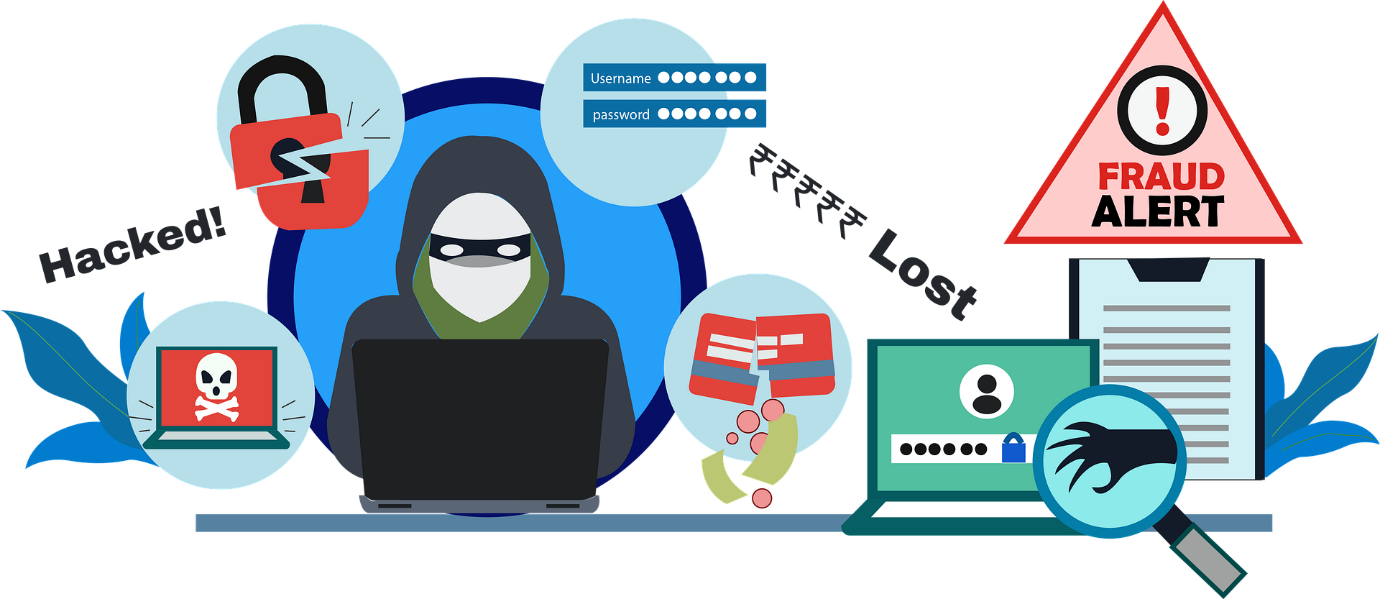
India’s digital payment revolution has transformed how we transact, but it has also opened the floodgates for sophisticated online banking scams. In 2025, cyber criminals are leveraging AI, deepfakes, and psychological manipulation to defraud millions. With over ₹11,000 crore lost to cyber scams in the first nine months of 2024 alone and a four-fold rise in high-value fraud cases, vigilance is no longer optional—it’s a survival skill.
This article explores the latest scams, real-life cases, and actionable strategies to safeguard your finances.
1. AI-Powered Voice Cloning Scams
How It Works:
Scammers use AI to clone voices of family members, colleagues, or bank officials. They create urgent scenarios (e.g., medical emergencies, legal threats) to trick victims into transferring money.
Real-Life Case:
A Mumbai businessman received a call from a “bank manager” warning of suspicious activity. The voice matched his actual bank representative, down to the tone and accent. Convinced, he shared his OTP, losing ₹18 lakh in minutes.
How to Avoid:
- Verify via alternate channels: Call the person/bank directly using official numbers.
- Beware of urgency: Legitimate institutions never pressure you to act instantly.
- Enable multi-factor authentication (MFA) for accounts.
2. AI-Generated Celebrity Investment Scams
How It Works:
Scammers use AI-generated videos and voice clones of celebrities like Elon Musk or Virat Kohli to promote fake crypto schemes or stock trading platforms. These “deepfakes” are shared on social media, luring victims with promises of “guaranteed high returns.”
Real-Life Case:
A retired pilot from Mumbai lost ₹72 lakh after interacting with fake social media accounts impersonating Elon Musk. The scammers convinced him to invest in a fraudulent SpaceX-linked trading portal, draining his savings over six months.
How to Avoid:
- Verify celebrity endorsements through official channels.
- Look for unnatural facial movements in videos (e.g., mismatched lip-syncing).
3. UPI Fraud: QR Codes & Fake Payment Links
How It Works:
Fraudsters send phishing links disguised as cashback offers or refund requests. Scanning malicious QR codes or entering UPI PINs grants them access to drain accounts.
Real-Life Case:
A Bengaluru techie received a WhatsApp message claiming a ₹50,000 reward for scanning a QR code. Upon scanning, ₹1.2 lakh was debited instantly. Such scams account for 55% of all digital payment frauds in India.
How to Avoid:
- Never share UPI PINs: Legitimate transactions never require your PIN to receive money.
- Check URLs: Fake links often have typos (e.g., “pnb-bank.com” vs. “pnb.com”).
- Use UPI apps with in-built fraud alerts like BHIM or PhonePe.
4. UPI “Pull Payment” Fraud
How It Works:
Scammers trick users into authorizing unauthorized transactions via UPI’s “collect request” feature. Victims receive fake payment links disguised as refunds or rewards.
Real-Life Case:
A Delhi homemaker lost ₹2.5 lakh after clicking a link promising a “COVID relief refund.” The transaction drained her savings account within minutes.
How to Avoid:
- Disable “auto-pay” for UPI collect requests.
- Use NPCI’s “UPI Lite” for small transactions without sharing bank details.
5. “Digital Arrest” Scams
How It Works:
Scammers pose as law enforcement, accusing victims of crimes (e.g., drug trafficking, tax evasion). Victims are “digitally arrested” via video calls and coerced into paying fines to avoid jail.
Real-Life Case:
A Hyderabad textile tycoon lost ₹6.2 crore ($830,000) after fraudsters summoned him to a fake Supreme Court hearing over Zoom. The scammers, posing as CBI officers, threatened him with arrest unless he transferred funds.
How to Avoid:
- Government agencies never demand payments via video calls.
- Verify legal notices: Cross-check with official websites or visit police stations.
- Report threats immediately to the national cybercrime helpline (1930).
6. Fake Trading Apps and “Too-Good-To-Be-True” Returns
How It Works:
Fraudulent apps mimicking legitimate platforms like Groww or Zerodha promise unrealistic returns. Victims are initially allowed small withdrawals to build trust before larger investments vanish.
Real-Life Case:
A Pune techie lost ₹91 lakh after investing in a fake stock trading app. He was lured with early profits of ₹9,000, only to lose his life savings when the app blocked withdrawals.
How to Avoid:
- Download apps only from official stores (Google Play/Apple App Store).
- Check for SEBI registration and user reviews.
7. Fake Investment Schemes
How It Works:
Fraudulent Telegram/WhatsApp groups promise unrealistic returns (e.g., “Double your money in 7 days!”). Victims are lured into fake stock, crypto, or forex platforms.
Real-Life Case:
In July 2023, a Hyderabad-based Chinese investment scam siphoned ₹712 crore from Indians. Victims were promised 200% returns on “AI-driven crypto trading” but lost everything.
How to Avoid:
- Research platforms: Check SEBI registration for stock apps or RBI approval for crypto exchanges.
- Avoid “guaranteed” returns: Legitimate investments carry risk.
- Use trusted apps: Stick to SEBI-registered platforms like Zerodha or Upstox.
8. Smishing (Fake Bank Texts)
How It Works:
Fraudsters send SMS alerts like “Your card is blocked! Click here to unlock”. Clicking links installs malware or directs to phishing sites.
Real-Life Case:
A Delhi retiree received a text claiming her SBI card was frozen. She entered her details on a cloned SBI portal, losing ₹3.5 lakh. Smishing attacks surged by 69% in 2024.
How to Avoid:
- Never click links: Manually type your bank’s URL.
- Check sender IDs: Banks use official short codes (e.g., “SBICARD”).
- Enable transaction alerts for real-time monitoring.
9. Romance Scams and Emotional Manipulation
How It Works:
Fraudsters build fake romantic relationships online, often through dating apps, and later request money for medical emergencies or travel.
Real-Life Case:
A Bengaluru woman transferred ₹30 lakh to a man she met on a dating app, who claimed to need funds for cancer treatment. The scammer disappeared after receiving the money.
How to Avoid:
- Never send money to someone you haven’t met in person.
- Reverse-image-search profile pictures to check for duplicates.
How to Protect Yourself: Prevention Strategies
A. Enable Multi-Layered Security.
- Use biometric authentication (fingerprint/face ID) for banking apps.
- Activate two-factor authentication (2FA) for all financial accounts.
B. Verify Before You Trust.
- Cross-check URLs: Scammers often use domains like `axis-bankk.com` instead of `axisbank.com`.
- For investments, verify platforms via SEBI’s SCORES portal.
C. Stay Updated on Scam Trends.
- Follow RBI’s fraud alerts and subscribe to your bank’s SMS notifications.
- Attend workshops like DoT and WhatsApp’s “Scam Se Bacho” campaign.
D. Report Suspicious Activity Immediately.
- Freeze accounts via your bank’s hotline if fraud is suspected.
- File a complaint at (https://cybercrime.gov.in) within 72 hours for higher refund chances.
- Monitor credit score: Check for unauthorized loans via CIBIL.
E. Public Awareness.
- Participate in RBI’s Digital Payment Awareness Week (March 2025).
- Follow Vigil Aunty (HDFC’s anti-fraud initiative) for scam alerts.
Government and Banking Sector Initiatives
- RBI’s AI-Powered Surveillance: Banks now use machine learning to flag unusual transactions in real-time.
- Stricter KYC Norms: The Bharatiya Nyaya Sanhita 2023 imposes harsh penalties for identity theft.
- NPCI’s UPI Reforms: Phasing out risk-prone “pull” transactions in favour of QR-based “push” payments.
Conclusion: Stay Vigilant, Stay Secure
As India’s digital economy grows, so do scams. By combining awareness, skepticism, and technology, you can outsmart fraudsters. Remember: If an offer seems too good to be true, it probably is.
- Never share OTPs, UPI PINs, or CVV numbers.
- Teach elderly family members about common fraud tactics.
- Spread awareness using resources like Google’s “About This Result” tool to verify suspicious links.
The fight against cybercrime is a collective effort—stay informed, stay safe!
Need Help? Contact the National Cybercrime Helpline at 1930 or visit cybercrime.gov.in.